CAMILO GARZÓN is an award-winning Colombian-American writer, filmmaker and transeúnte¹ based in the San Francisco Bay Area.


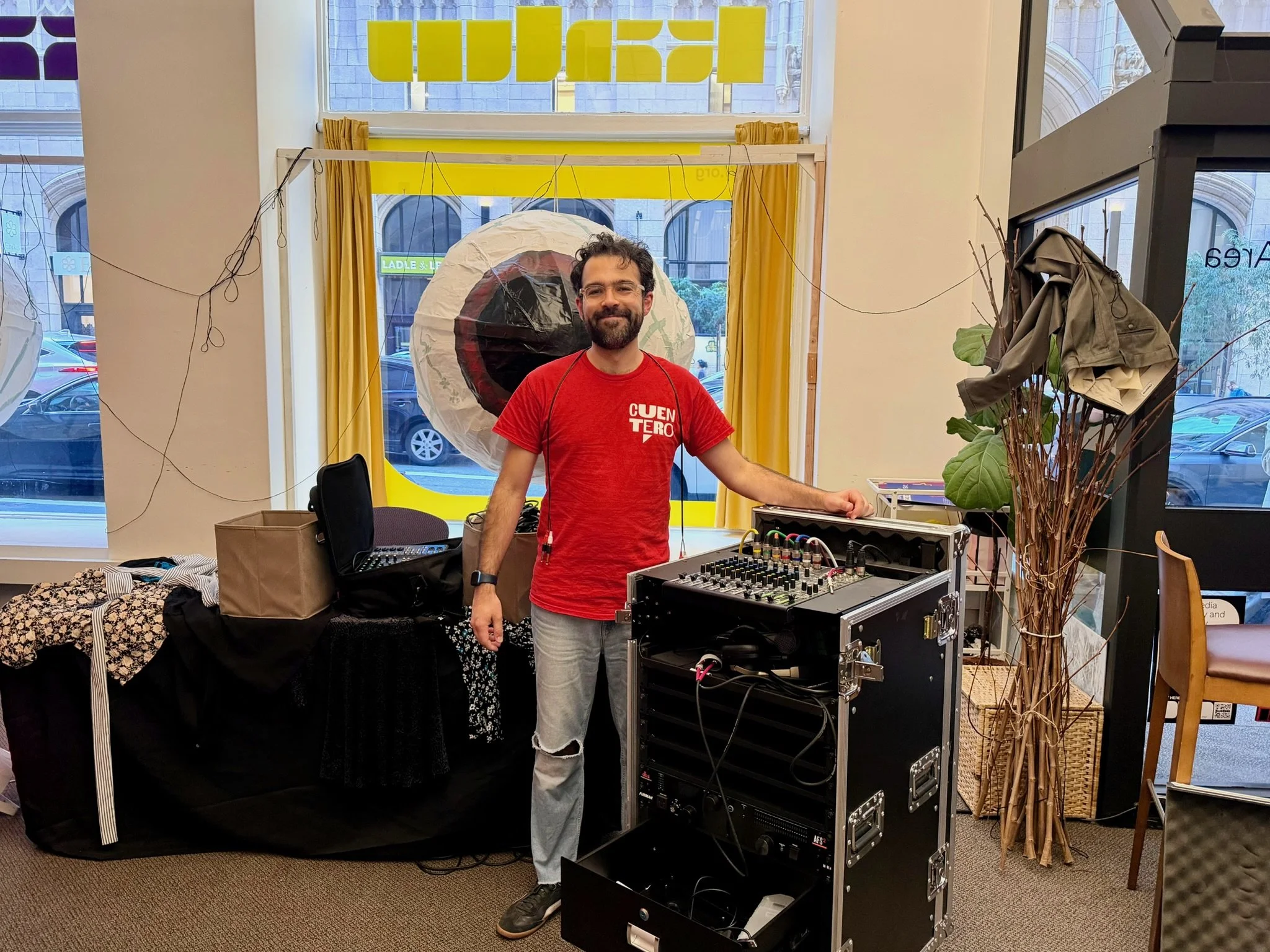

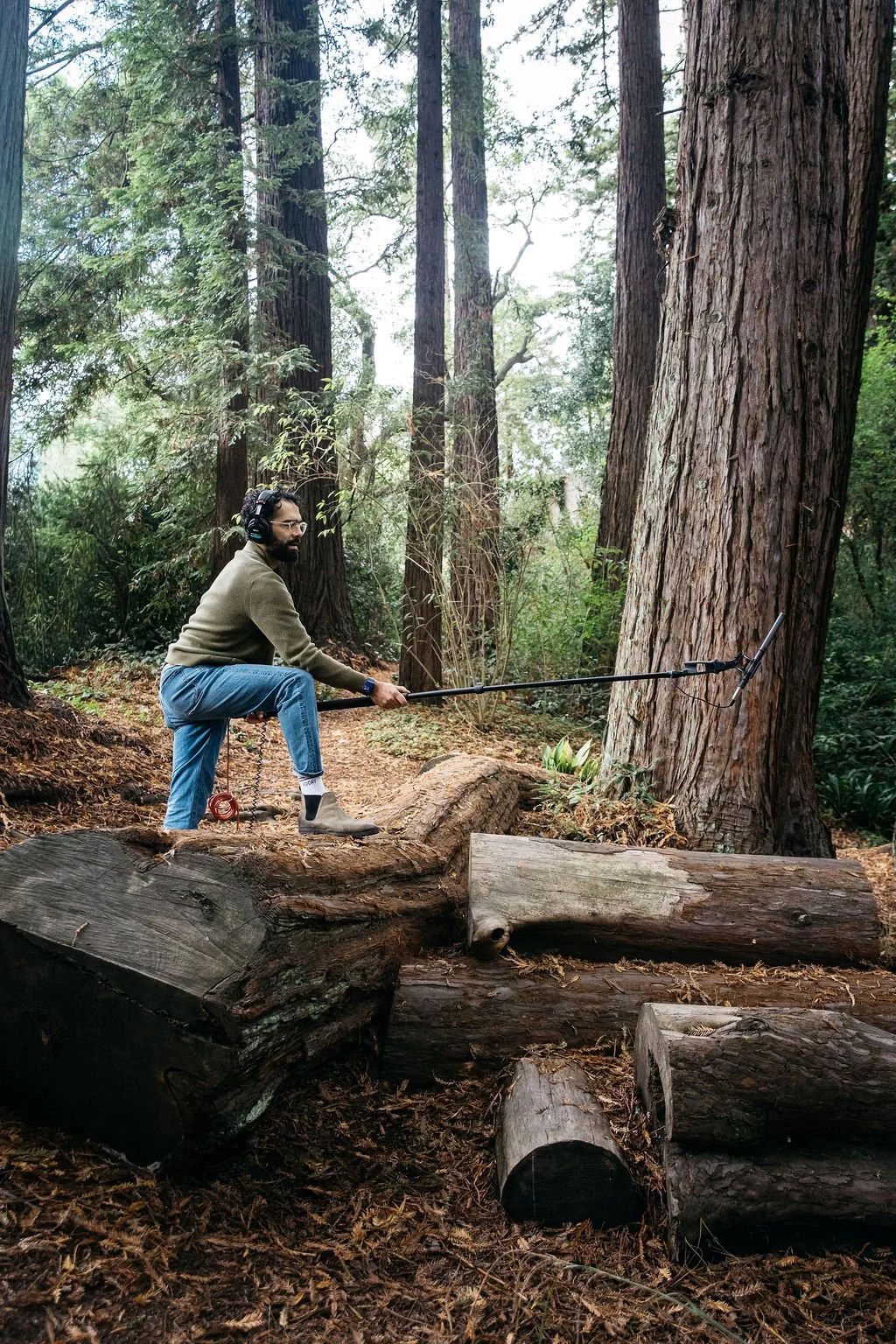
He is the founder of the award-nominated multimedia production house Cuentero Productions, weaving entertaining fiction and non-fiction tales.

Cuéntame un cuento, cuentero
Harnessing cross-disciplinary storytelling, his long-view work bridges the gap between diverse epistemologies, environmental science communication, cultural histories, and engaging multimedia experiences, all rooted in his belief in meliorism².
Born and raised in Bogotá, Colombia, Camilo moved to the United States in 2011 at the age of 18. He became a dual citizen of the United States and Colombia in 2017. A graduate of Rollins College with Bachelor of Arts degrees in Philosophy and Religious Studies (cum laude), his interdisciplinary path blends deep academic theory with boots-on-the-ground multimedia journalism and award-winning filmmaking and writing work.
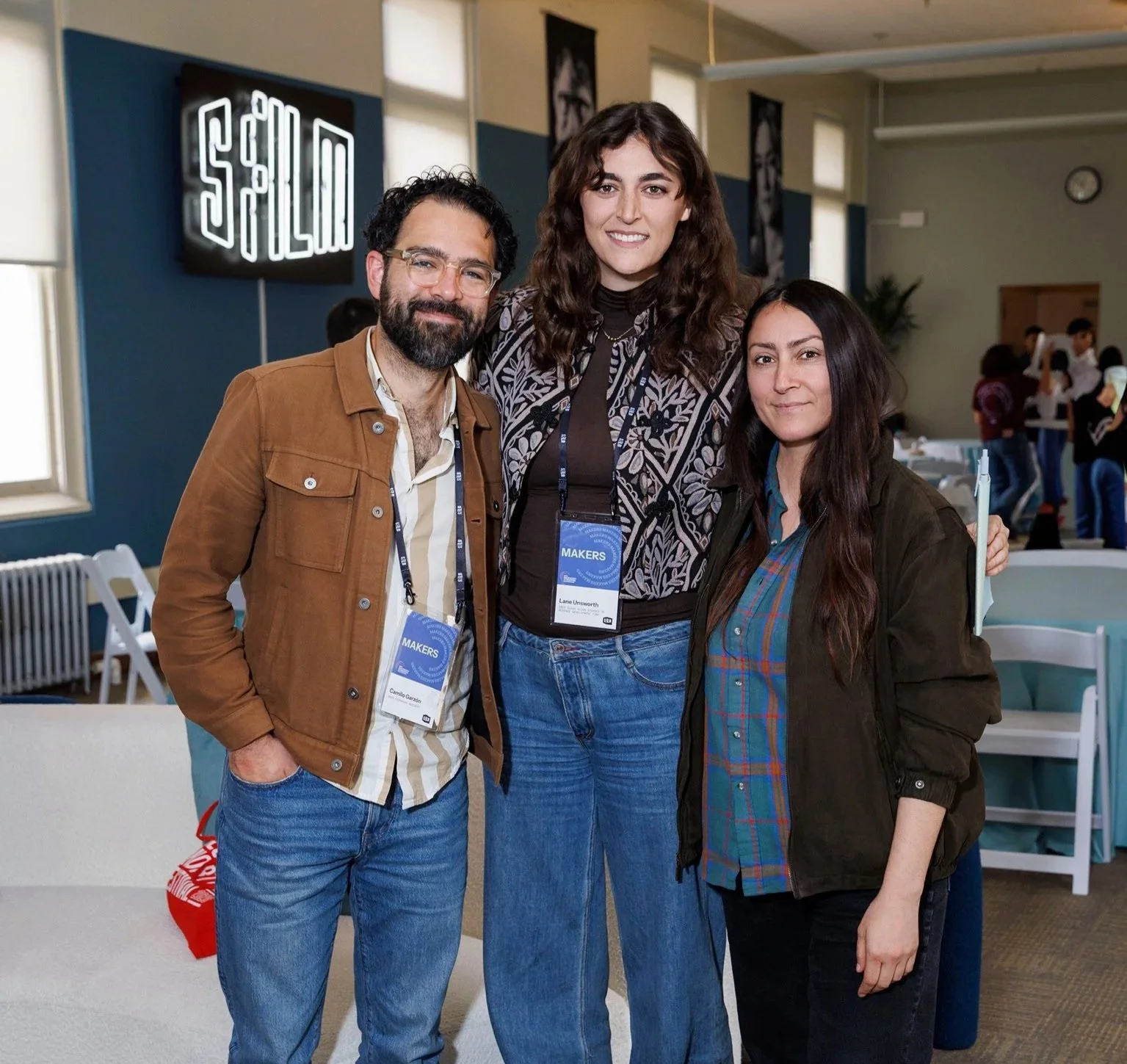
Camilo splits his professional time writing, editing, producing, and directing audio, digital, and film projects for an international, multilingual, and multidisciplinary roster of clients, collaborators, and creative partners. Currently, his filmmaking career is supported by an SFFILM FilmHouse Residency.
Most recently, Camilo served as the AskNature Program Director & Publisher at The Biomimicry Institute, where he led the global platform, programmatic strategy, publishing operations, and community, inspiration, education, and media sub-programs expanding access to nature-inspired innovation.
He has directed projects for world-renowned cultural institutions and global tech giants across the Bay Area’s Silicon Valley and Los Angeles, produced multimedia content for major industry collaborations with clients like Extreme Reach @ Apple, Inc., Heads Ain’t Ready x Sony, and has given lectures and conducted seminars at UC Berkeley, University of Oregon, and University College Dublin.
Camilo’s work has been supported, featured, or is forthcoming via a variety of public and private media programs, as well as some of the world’s premier cultural and scientific institutions, including NPR, Al Jazeera, the San Francisco Museum of Modern Art (SFMOMA), National Geographic Society, and the Stanford Center on Longevity, among many others.
He is a recipient of the inaugural San Francisco Foundation/Nomadic Press literary award for poetry, a former non-fiction judge for the same award, a Webby Award nominee, a Signal Awards winner, and currently serves as an industry judge for the same award.

Featured Press,
Profiles & Media Spotlights
Camilo's creative ventures, cross-disciplinary research, and documentary projects have been profiled and reviewed by leading global journalism and digital media publications:
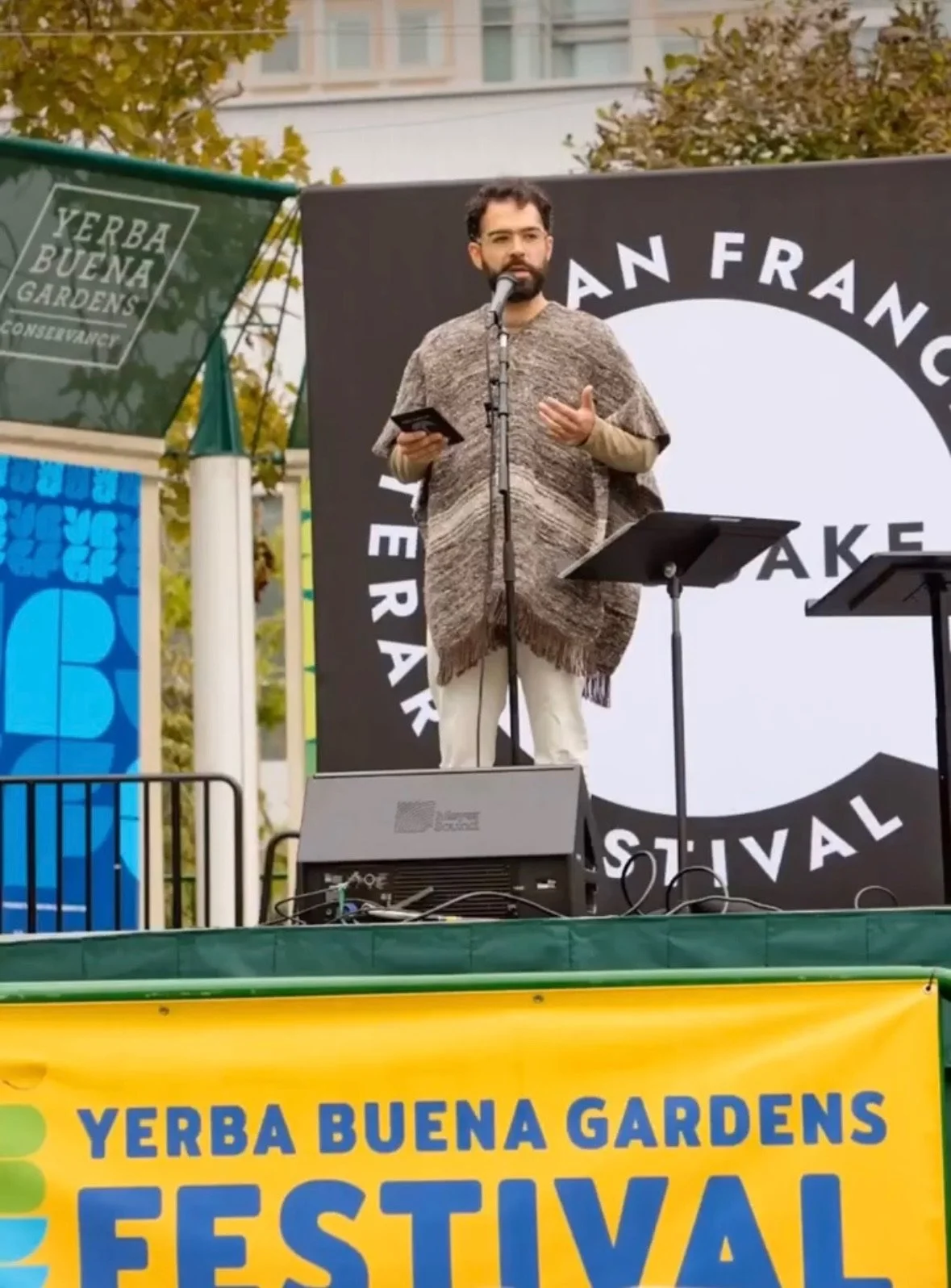
San Francisco Chronicle (2025): Event feature spotlighting Camilo's curated showcase, live performances, and panel design during his 2025 Litquake institutional presentation.
The New York Times (2022): Featured commentary and cultural evaluation regarding Colombian representation, cinematic accuracy, and national identity dynamics in a major media profiles.
KQED (2023): Featured artist highlight introducing Camilo’s multi-hyphenate literary, theatric, and multimedia work adapting “Soroche” to California public media audiences.
[1] transeúnte <<trahn-seh-OON-teh>>
Del lat. transiens, transeuntis, part. pres. act. de transire 'ir de un lugar a otro', 'pasar'.
1. adj. Que transita o pasa por un lugar. U. t. c. s.
2. adj. Que está de paso, que no reside sino transitoriamente en un sitio. Apl. a pers., u. t. c. s.
3. adj. De duración limitada.
4. adj. Fil. Que se produce por el agente de tal suerte que el efecto pasa o se termina fuera de él mismo.
In English: A passerby
e.g., “And does not every Homo sapiens that is hurrying somewhere resemble Achilles? Nobody is able to catch up with one’s tortoise, reach something close by, whatever it could be. A survey of the late fall. Occupation – a passerby. Place of work – the street. The length of employment in the given field – eternity.”
[2] meliorism <<MEE-lee-uh-riz-um>>
1. noun. Refers to the belief that the world tends to improve and that humans can aid its betterment.
e.g., “"'Encanto' has been praised for its cultural accuracy. And many Colombians and Colombian Americans loved the film—but it has also started a debate: What can and can't one movie capture about a country? … 'I found it charming,' the writer and editor… [Camilo G.] explained, 'In the spirit of American meliorism, the criticism is to make things better, not necessarily because I didn’t like it.'"